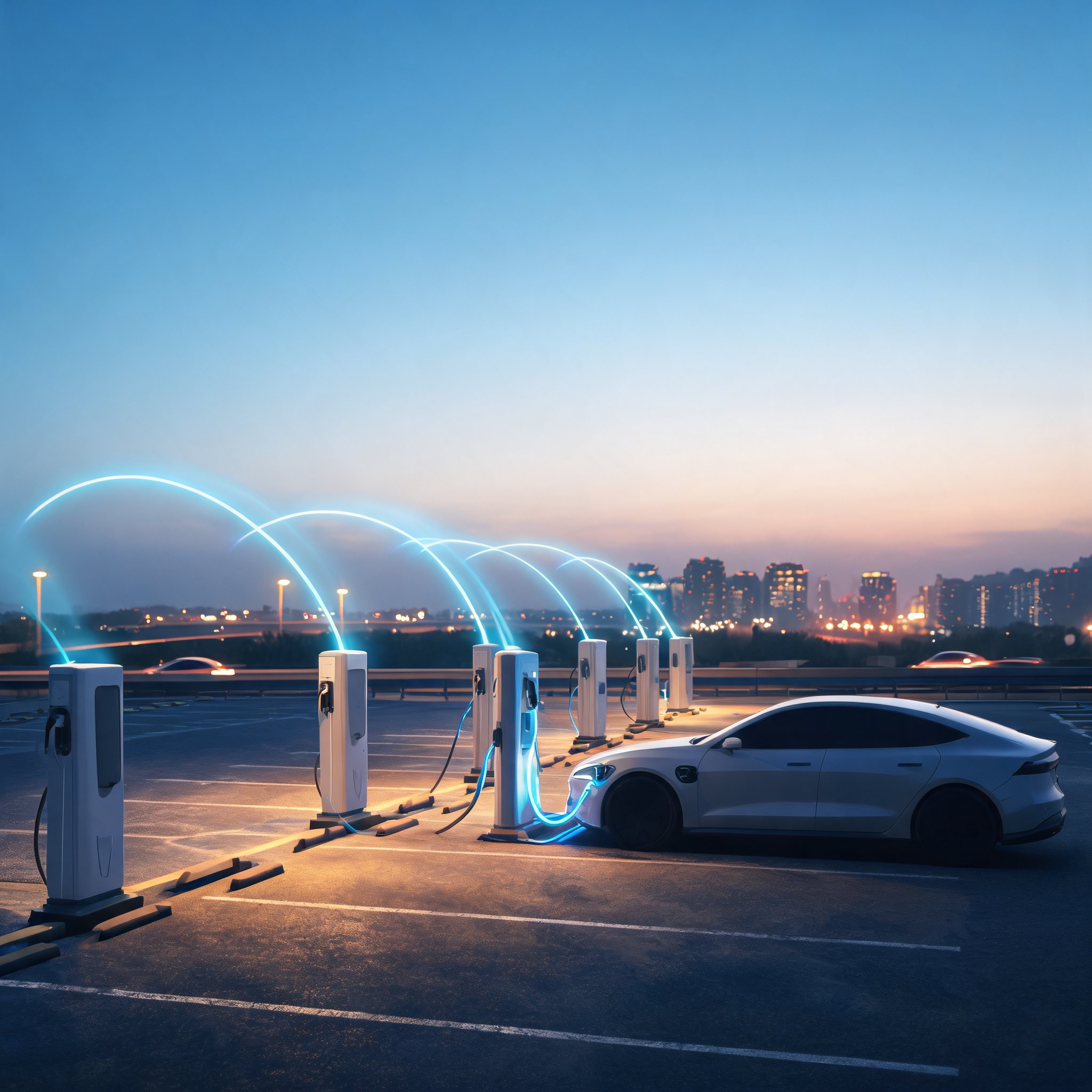
BP Pulse has joined ChargeHub's Passport Hub roaming platform, bringing more than 850 charging points across over 95 locations into the North American roaming network, the two companies have announced.
The integration allows EV drivers to find, access and pay for charging at BP Pulse sites through the ChargeHub app. Those sites will also become reachable by users of other e-mobility service providers (eMSPs) and by automakers connected to Passport Hub, so access is not limited to ChargeHub's own customer base.
Passport Hub is ChargeHub's roaming platform, which connects charging networks with mobility service providers and vehicle manufacturers. Its purpose is to simplify access to public charging: drivers keep using the apps and services they already have across multiple networks, instead of registering separately with each charge point operator.
What the announcement does and does not specify
The companies disclosed the number of charging points and locations but did not say how many of the 850-plus points are rapid or ultra-rapid chargers. Nor did they state whether all 850 points are available through every Passport Hub partner. Those details matter for drivers, because the practical value of a roaming agreement depends on which sites and which power levels a given app can actually reach.
No financial terms, contract duration or rollout schedule were released, and the announcement describes no hardware or software changes at the BP Pulse sites themselves. On the published information, the change concerns access rather than new infrastructure.
How each side frames the agreement
For BP Pulse, the deal widens the reach of its North American charging network by making its infrastructure available through a broader set of third-party platforms. For ChargeHub, it adds another charging network to the roaming ecosystem that sits behind Passport Hub.
Sujay Sharma, BP Pulse's VP of EV Charging for the US, said the partnership expands access to the BP Pulse network through trusted roaming partners for drivers on the road, and argued that charging networks working better together benefits the entire EV ecosystem and is an important step toward accelerating EV adoption.
Simon Ouellette, CEO of ChargeHub, said that a network of BP Pulse's scale choosing to connect through Passport Hub is a strong signal that the hub model has become the way roaming gets done in North America. Because it is a hub, he said, the impact goes well beyond the ChargeHub app: the eMSPs and automakers in the ecosystem can now offer their drivers access to BP Pulse fast chargers through connections they already have. When one major network joins, he added, the whole ecosystem gets better at once.
Both statements are company positions on the expected value of the arrangement. The announcement contains no usage figures, utilisation data or measured outcomes from comparable integrations, and the article tags place the deal in the US, Canada and North America.