At the Perennial Plant Association’s National Symposium in East Lansing, Michigan, Justin Lombardoni used a session with perennial breeders to explain what sets the Chicago Botanic Garden’s breeding program apart from its for-profit counterparts. Lombardoni, the Garden’s ornamental plant breeder, said the program is, to his knowledge, the only breeding program at a botanic garden. Being part of a nonprofit institution changes which genera the program targets and which traits it pursues, he argued, and those differences are worth examining because they show how breeding priorities can follow institutional missions rather than only commercial release schedules.
The first difference is genus selection. The program prioritizes native plants, though not exclusively. Lombardoni noted that people define “native” differently—sometimes by county, sometimes by state, sometimes by region—and said he prefers the regional standard. His reasoning is ecological rather than administrative: plants do not recognize artificial borders between counties or states, especially when those borders lack physical barriers that would keep a species from spreading. That view matters for a breeding program because it defines nativeness at a regional scale rather than stopping at a county or state line.
When the Garden considers an exotic genus, Lombardoni said, it looks at two seed-related factors that can contribute to invasive potential. The first is fecundity, or how much seed a plant produces. The second is dispersal, or how readily those seeds spread, whether only a few feet or much farther. In some cases the program also considers vegetative spread, because a species may expand through rhizomes, stolons, suckers or other non-seed means. Lombardoni cited kudzu as an extreme reminder of what can happen when a plant’s ability to spread is underestimated. This is a screening framework, not a claim that exotic plants are inherently invasive; it focuses attention on reproduction and spread before a genus enters the program.
Niche genera and the limits of a small program
Native or not, the Chicago Botanic Garden program concentrates largely on niche genera. Lombardoni was direct about the reason: the program is small and has limited resources, so it cannot compete head-to-head with larger commercial breeding programs. Even if it could, many mainstream genera are already saturated with dozens, if not hundreds, of cultivars. He asked whether the market needs another Echinacea or Hosta when comparatively esoteric genera still have untapped potential. The point is that a small nonprofit program can make a more distinctive contribution by working in less crowded plant groups.
Traits the program does not chase
The traits the program focuses on vary greatly by genus, so Lombardoni explained some of the traits it does not pursue. The most prominent is highly compact cultivars. These have proliferated in industry breeding over the past decade or two because they look good in pots and can be shipped more efficiently. Lombardoni said he would not be against releasing a compact cultivar if a promising selection arose, but it is not something he actively seeks. He also clarified what “compact” means in this context: roughly 30 inches or shorter in height. A four-foot-tall cultivar bred from a species that is normally five or six feet tall would not, in his view, be very compact. He distinguished between reining in the size of an unruly species and releasing a cultivar that is half, or less, the height of the species from which it was bred.
The program also avoids sterility, which in ornamental horticulture can sometimes take the form of “double” flowers. In those cases, additional petals may replace the pistils or stamens, potentially reducing available pollen or making other floral resources less accessible to pollinators. Lombardoni broadened the point beyond sterility: the program does not seek to breed cultivars with traits that hinder their ecological function. That standard applies across genera, even though the specific traits under review vary.
Pollinator work and a representative cultivar
Pollinator support is an important consideration for many home gardeners, and Lombardoni said the Garden hopes to collaborate with its Science Department, which is partnered with Northwestern University, to study pollinator visitation to the program’s breeding selections and compare their performance with straight species. The goal would be to better understand how the abundance and diversity of pollinator visitation compare between the two. This is a planned line of inquiry, not a completed result, so it should be read as a research direction rather than evidence that every selection has already been shown to outperform its wild counterpart.
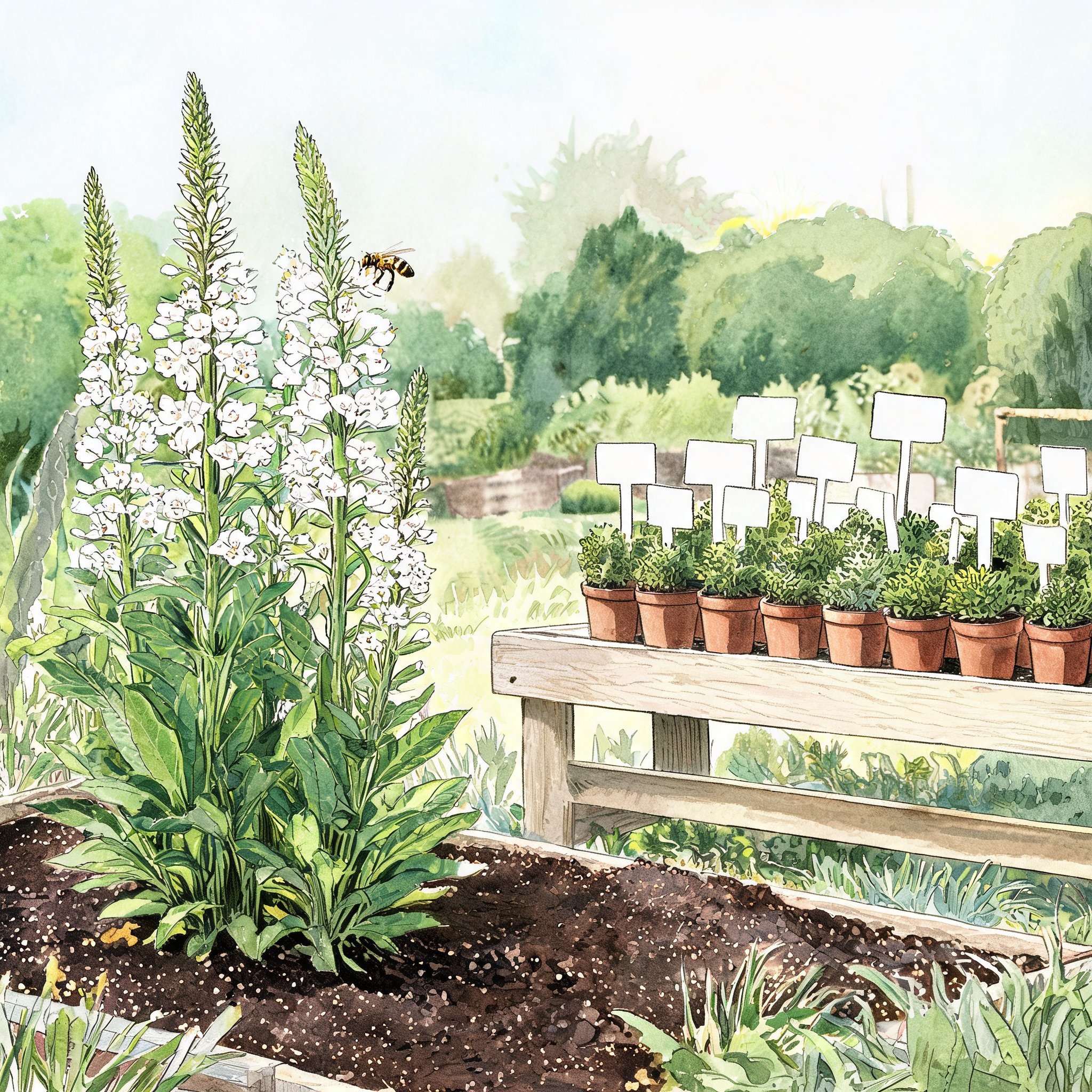
One cultivar that encapsulates the program’s approach, according to Lombardoni, is Eutrochium maculatum ‘Summer Snow,’ released about 10 years ago. It was bred from germplasm collected roughly 90 miles from the Garden. Although that germplasm came from three counties away, he still considers ‘Summer Snow’ a native selection because its species is also native to the Garden’s county. At five feet tall, it is not significantly shorter than the straight species, and its highly upright stems bear white flowers that support pollinators from mid- to late summer. The example shows how the program’s native-plant preference, its willingness to release a plant that remains close to species height and its attention to pollinator function can converge in a single release.
Why nonprofit status changes the calculus
Aesthetics are a major consideration when breeding perennials for the commercial market, especially how a plant looks in a pot, and Lombardoni acknowledged that ecological function may not always receive the same emphasis. Because the Chicago Botanic Garden is a nonprofit organization, its breeding program is not seeking to release a certain number of cultivars each year or to maximize sales of each one. That lack of pressure, he said, allows it to breed perennials differently from many commercial programs. The contrast is institutional: release quotas and sales targets create a different set of priorities from those of a nonprofit program.
Lombardoni’s broader concern is visible in his closing hope: that gardens will not someday consist entirely of perennials two feet or shorter. The concern is not simply height, but a breeding system organized around pot performance and shipping efficiency that can narrow the range of plants available. A nonprofit program with different goals can keep taller, ecologically functional selections in view. Its approach also has boundaries: it is one program, its pollinator comparisons are still planned, and its native standard is regional rather than universal. Within those limits, the Chicago Botanic Garden case shows how institutional mission can shape not only which plants are bred but which traits are treated as worth pursuing.