Germany’s deposit return scheme (DRS), widely known as Pfand, has reached 20 years as a nationwide system for single-use beverage containers, with the country’s reported aluminium can recycling rate standing at 99%. According to an International Aluminium Institute (IAI) study, that rate leads Germany’s packaging recycling picture, ahead of 95% for PET bottles and 81% for glass bottles. The study places Europe’s overall recycling record at 76.3%.
The system’s development was gradual. The mandatory deposit requirement was decided in 2003. Two years later, retailers and the drinks industry jointly established Deutsche Pfandsystem GmbH (DPG) to create a standardised framework for implementation. The nationwide DPG system for single-use beverage packaging began operating in May 2006, supported by an extended take-back obligation that required the new arrangements from 1 May that year. The aim was to combine common standards with defined roles for retailers, drinks companies and other market participants.
Under the scheme, consumers pay a EUR 0.25 (USD 0.28) deposit on eligible single-use beverage containers and recover it when they return the empty packaging through an accepted collection point. Retail take-back, reverse-vending machines and standardised container identification have helped make returns part of routine shopping. According to DPG material, the system now handles around 20 billion containers annually, making it the largest one-way deposit-return system in the European Union. More than 1,000 companies are affiliated as participants and partners.
A dedicated stream for used beverage cans
For the aluminium industry, the main advantage of DRS is not only the number of cans returned. The scheme creates a reliable, dedicated stream of used beverage cans that can enter organised collection and recycling channels instead of being lost in mixed waste. The EUR 0.25 refund gives consumers a direct financial reason to return containers. Retail take-back and reverse-vending machines add convenience, while container recognition and standardised identification help separate eligible packaging into distinct collection streams.
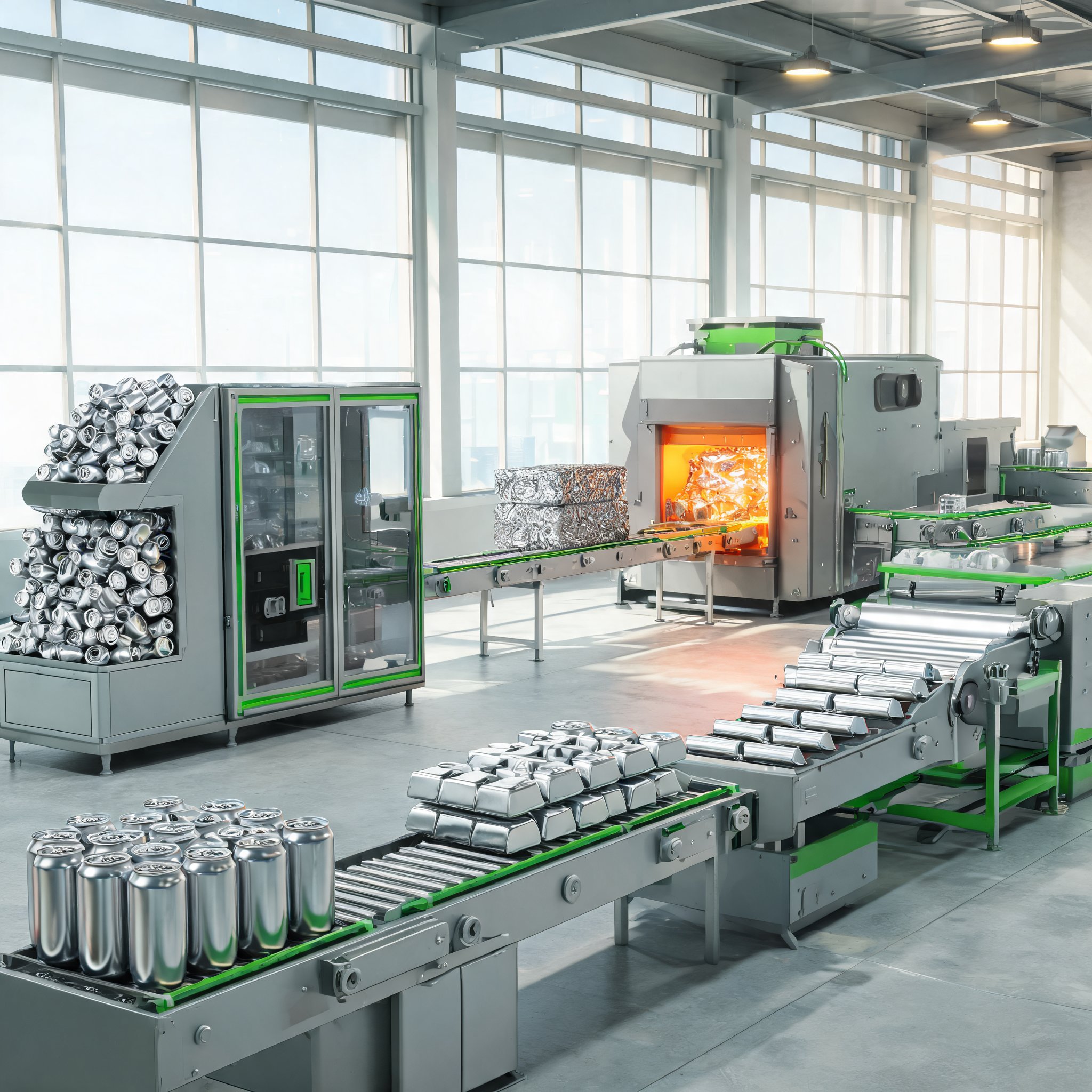
Germany’s collection performance is matched by a sizeable recycled aluminium industry. National recycled aluminium capacity is estimated at around 700,000–720,000 tonnes annually. Novelis operates its Nachterstedt facility in Germany, described as the world’s largest aluminium recycling facility, with capacity to process up to 400,000 tonnes of aluminium scrap annually. Hydro-owned WMR Recycling GmbH in Dormagen supplies technology-driven sorting equipment and can sort 36,000 tonnes of aluminium scrap per year using X-ray transmission and other sorting technologies. Trimet Aluminium SE has expanded its Gelsenkirchen recycling facility, increasing production capacity by 20% to 80,000 tonnes of recycled aluminium.
These operations show how collection and industrial recovery connect. DRS brings containers into organised channels; sorting and recycling facilities then prepare the recovered metal for further use. The two functions are complementary in Germany’s aluminium can recycling story.
Twenty years marked in Berlin
The 20-year milestone was marked at anniversary celebrations in Berlin on 17 June 2026. The European Commission and Germany’s Federal Environment Ministry highlighted the scheme’s contribution to the circular economy. EU Commissioner for the Environment Jessika Roswall said all packaging — whether glass bottles, plastic bottles or aluminium cans — should be sent for recycling to increase efficiency, reduce waste and protect the environment. Antje von Broock, head of the Department for Circular Economy, Air Pollution Control and Chemical Safety at the Federal Environment Ministry, said the deposit-refund system makes a very important contribution to the circular economy today. DPG Managing Director Susanne Kürschner noted that the organisation and its partners had maintained the system’s stability while making it more efficient, resilient, future-proof and scalable.
Germany’s DRS operates alongside broader packaging collection arrangements, including household sorting through the Dual System, commonly associated with the Grüner Punkt. The deposit scheme provides a dedicated route for eligible single-use beverage containers, while other packaging remains subject to the relevant collection and compliance arrangements. As Europe looks to strengthen packaging circularity, Germany’s two-decade record offers a practical example of how collection systems can connect consumer behaviour with aluminium can recycling.