A U.S. Department of Energy emergency order directing PJM Interconnection to use additional generating resources should serve as a warning for Michigan and the wider PJM region, according to a commentary by Terence Parker, a Michigan resident and Solar Mounts LLC team member.
The order, issued October 12, 2026, and effective October 13–16, authorizes specified power plants to operate as needed for reliability. It also allows backup generators at large facilities to help reduce grid demand during emergencies. Parker argues the measure does not mean blackouts are inevitable, but it highlights serious challenges facing the electricity system and the need to add capacity before emergency actions become routine.
Solar Mounts LLC, a Michigan-based designer and manufacturer of commercial and utility-scale solar mounting systems, says the order has implications for electricity prices, air quality, local businesses and families across the state. In the commentary, Parker points to PJM’s capacity auctions as evidence of the difficulty in securing enough electricity for future demand. Prices reached $329.17 per megawatt-day for the 2026–2027 delivery year and $333.44 for 2027–2028, with the later auction falling short of PJM’s stated reliability requirement.
Capacity costs are only one component of electricity bills, Parker notes, but rising prices signal growing pressure on consumers. He argues that more power is needed before shortages force increasingly expensive emergency responses.
Order Allows Broader Backup Use
Under the October 2026 order, designated generating units may exceed specified operating limits when necessary for reliability. PJM is also authorized to direct backup generation at data centers and other large facilities, potentially including diesel generators as a last resort.
The commentary says running fossil-fuel plants more frequently can increase emissions, depending on the units involved, while operating diesel generators would worsen local noise pollution and expose operators to high diesel prices. If such measures become more common, Parker asks why cleaner generation and storage are not coming online faster.
Weather uncertainty adds urgency. NOAA’s October 15, 2026, winter outlook anticipates warmer-than-average conditions across much of the northern United States, including the Midwest, influenced by a strong El Niño. Parker cautions that seasonal forecasts cannot predict every period of extreme demand, and that aging infrastructure, maintenance, changing weather and growing electricity consumption reinforce the need for advance planning. Temporary authority to run additional fossil-fuel resources cannot replace long-term investment in generation, he argues.
Solar, Wind and Batteries Cited as Faster Options
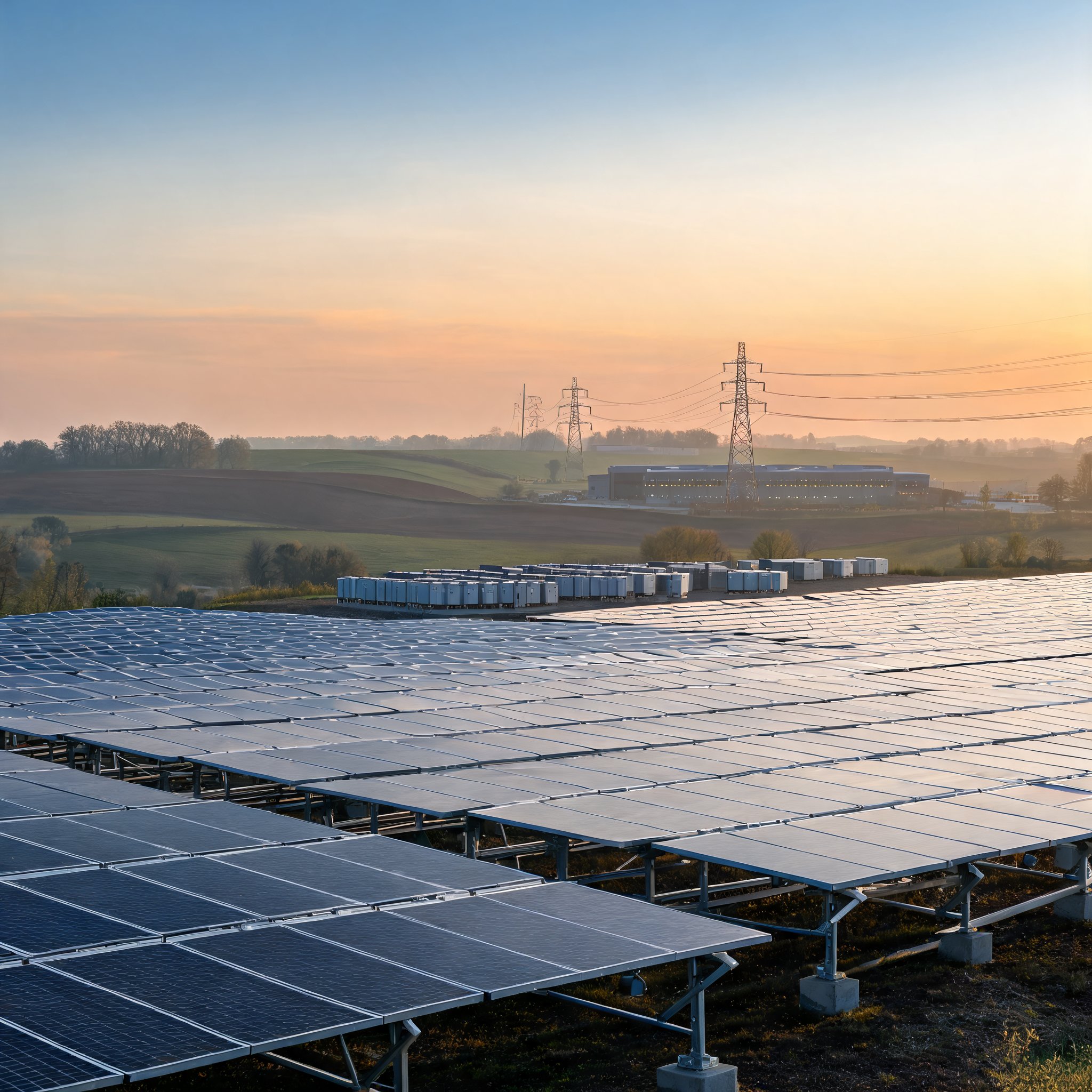
Utility-scale solar, wind and battery storage can help meet demand on timelines that many conventional generation projects cannot match, according to the commentary. Suitable solar projects may be built within 18 months, depending on permitting, equipment and interconnection. New nuclear facilities generally require substantially longer development periods.
Solar and wind reduce emissions when they displace electricity from fossil-fuel generators, while batteries store surplus electricity for periods of higher demand. Parker notes that actual emissions benefits depend on which generators are displaced and when electricity is delivered.
The commentary also calls for faster interconnection reviews and better coordination among PJM, utilities, regulators, developers and state governments, alongside necessary transmission upgrades, to bring capacity online sooner.
Siting and Data Center Demand
On land use, Parker acknowledges concerns about installing solar on productive farmland in rural Calhoun County, where Solar Mounts LLC is based. He says well-designed projects can include restoration plans that allow agricultural use to resume when leases end, and that solar leases can provide farmers with supplemental income when crop prices fail to keep pace with production costs. Agrivoltaic systems combine electricity generation with compatible crops or livestock, while parking lots, commercial properties, brownfields, landfills and other underutilized sites can also accommodate solar. Solar carports can provide electricity, shade and weather protection, and community solar can expand access for people unable or unwilling to install their own panels.
The commentary also addresses growing data center demand, particularly in Virginia and other parts of PJM’s territory, which it says is adding pressure to an already constrained grid. Developers of new hyperscale facilities should demonstrate how they will secure adequate electricity and pay their fair share of supporting infrastructure, Parker argues. Dedicated generation, renewable energy contracts, batteries, flexible demand and grid upgrades can all contribute. Requiring every facility to build a gas-fired peaker plant is not necessarily the best answer, he writes: gas turbines face equipment and supply-chain constraints, and additional fossil-fuel generation carries emissions and operating costs. A combination tailored to each location is more practical, and existing facilities should reduce peak demand where possible.
Solar Mounts LLC says it supports faster approvals, better grid planning and a serious commitment to adding generation and storage before shortages worsen. Parker concludes that repeated emergency orders, rising capacity costs and greater reliance on high-emission generation are not sound long-term strategies.